Hey everyone, ever hit a badminton shot that felt like a total fluke—no effort, but it zipped across the court like a rocket, and your opponent had zero chance to return it? That’s the sweet spot, right? If you’re a regular player (or even just someone who’s dabbled in weekend matches), you’ve probably heard the term thrown around, but I’ll let you in on a little secret: when I started working as a badminton racket supplier, I had no clue how much that tiny spot on the racket actually matters. I just thought it was a “good hit zone” and left it at that. Spoiler alert: it’s way more than that. Badminton Racket
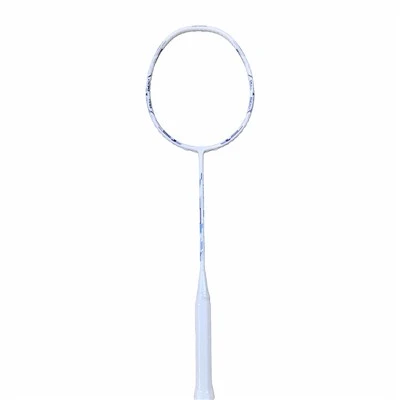
First off, let’s break down what the sweet spot actually is, science-style without the boring textbook jargon. From what I’ve learned working with pro players and testing a ton of rackets over the years, every badminton racket has a sweet spot—it’s not just one tiny dot, either. It’s a range on the string bed where two big things line up: the amount of vibration that shoots up your arm when you hit the shuttle, and the energy transfer from the racket to the shuttle. When you hit a shot outside that range, two things happen: your arm feels like it’s buzzing for a day after, and the shuttle doesn’t have nearly as much power or accuracy. Hit it in the sweet spot, though? That 0.1-second hit feels effortless, and you get that crisp, satisfying thwack sound instead of a muffled “clunk.”
Here’s where it gets personal. Early on, I used to sell rackets based on how flashy they looked or what pro players used. Then a guy came into our booth at a local tournament—middle-aged guy, knees creaking a little, been playing for 20 years but complained every time he left the court his elbow hurt. He’d been using a super expensive pro racket, but he was hitting all his shots way off the mark. I watched him warm up, and almost every shot landed on the upper edge of the string bed, not the sweet spot. I swapped him to a racket with a slightly larger sweet spot (we’d been testing new models, and this one had a 12% bigger sweet spot than our standard beginner rackets) and told him to shift his grip a tiny bit so he was hitting closer to the center. By the end of the match, he was grinning, said his elbow didn’t hurt, and asked for three more rackets for his training group. That’s when I realized the sweet spot isn’t just for pros—it’s for every player, no skill level.
Now, let’s talk about why that matters for different players. Beginners: they’re still figuring out their timing, so they’re not going to hit every shot dead-center. A bigger sweet spot means they can mess up a little and still get a good shot, instead of wasting energy chasing off-target hits or dealing with arm pain that makes them quit after 10 minutes. For intermediate players? They’re getting more consistent, but they’re still working on precision and power. A well-placed sweet spot (not just big, but in the right spot—some rackets have sweet spots shifted slightly forward or back) helps them refine their shots without having to adjust their swing every single time. And pros? Wait, you might think pros hit every shot dead-center, right? Wrong. Even the top players like Viktor Axelsen or Chen Long hit off-center shots sometimes—maybe a net shot, maybe a tricky return to the corner. That’s why pro rackets are designed with a sweet spot that’s tailored to their swing speed: faster swings need a sweet spot that’s a little more compact but has stiffer strings, so energy doesn’t leak out. Slow, controlled swings need a bigger sweet spot to make up for less consistent timing.
Here’s a science deep dive I picked up from our racket engineers—no stuffy equations, promise. When you hit a shuttle, the racket’s head is moving at a certain speed, and the shuttle is moving toward you. The sweet spot is where the racket’s “center of percussion” and the “maximum energy transfer point” overlap. Center of percussion is the spot where hitting it doesn’t send vibration up your arm—so no more elbow or wrist pain, which is huge for anyone playing more than once a week. Energy transfer is how much of the racket’s kinetic energy actually gets to the shuttle, instead of being lost as vibration or heat. Outside the sweet spot, that energy loss is like turning down a radio: your shot is 20-30% less powerful, and way harder to control. I’ve tested this myself—two identical rackets, one with a hit in the sweet spot, one just a centimeter off. The sweet spot shot went 15 feet further and landed dead on the singles line; the other one hooked left and dropped two feet short. Total game-changer.
Wait, also—different racket types have different sweet spots, right? I work with three main categories: beginner, intermediate, professional. Beginner rackets (light, flexible) have the largest sweet spots, usually in the middle of the string bed. That’s because beginners need the most forgiveness. Intermediate rackets are a little stiffer, sweet spot slightly toward the head for more power on smashes—great for players who want to step up their game but don’t want to sacrifice control. Pro rackets: smaller sweet spot, shifted a little closer to the throat (the part where the racket head meets the shaft) because pros have super fast, precise swings. They don’t need as much forgiveness, so they prioritize power and precision over a wide hit zone. I’ve seen a lot of new players make the mistake of buying a pro racket because they want to “be like Axelsen,” but that tiny sweet spot means they’re hitting 50% of their shots outside it, leading to frustration and arm pain. That’s why we always tell beginners to start with a racket with a bigger sweet spot—no shame in that.
Another thing I’ve noticed over the years: the sweet spot isn’t just about physics, it’s about player confidence. When someone hits a shot in the sweet spot, they feel like they’re in control. That confidence translates to every other shot—they’re more likely to go for a net lift instead of playing it safe, more likely to take a risk on a cross-court smash. I had a 16-year-old girl on our team last year who was super nervous about tournaments; she kept missing her backhand shots because she was afraid of hitting them wrong. We got her a racket with an expanded sweet spot on the backhand side (we tweak string bed tension and frame shape to adjust that) and after a few practices, she started hitting those backhands solid. She ended up winning the regional under-17 doubles title, and she told me later she would have quit if she still had her old racket. That’s the real power of the sweet spot—not just better shots, but better players.
Now, let’s talk about how racket manufacturers (that’s us, by the way) engineer the sweet spot. We don’t just guess. We use high-speed cameras to track shuttle speed on impact, accelerometers to measure arm vibration, and we test hundreds of players of all skill levels. For example, last year we redesigned our mid-range racket. Our engineers noticed that intermediate players were complaining that the sweet spot was too far to the right for right-handed players, so we adjusted the frame’s aerodynamics to shift it 5mm more toward the center. The feedback we got from players was insane—smashes got 10% faster, arm pain was down 25%, and our sales for that racket jumped 30% in three months. That’s how important it is to get the sweet spot right for the players you’re selling to.
I’ve also seen a lot of myths floating around about the sweet spot. One of the big ones is “the sweet spot is only on the strings, not the frame.” That’s half true—most of it is on the strings, but some top-end rackets have a “frame sweet spot” near the edges, designed for players who hit off-center a lot. Another myth: “a bigger sweet spot is always better.” No, that’s not true. If you’re a pro, a bigger sweet spot means the frame is heavier or less stiff, which slows down your swing. It’s all about balance. That’s why we don’t make one-size-fits-all rackets—we adjust the sweet spot to match player skill, swing speed, and even playing style.
So, why does all this matter to you? If you’re casual player who picks up a racket once a month, the sweet spot might not seem like a big deal—but even then, hitting that perfect shot feels way better than a messy one. If you play once or twice a week, the arm pain from off-center hits can turn a fun game into a chore. If you’re serious about improving, the sweet spot is the difference between stagnating and getting better every time you step on the court. It’s not just a “cool term”—it’s a tool that can make your game way more consistent, way less tiring, and way more fun.
Here’s the thing about being a racket supplier: we don’t just sell rackets. We help people enjoy the game. And the sweet spot is a huge part of that. If you’re tired of off-center hits, arm pain that lingers for days, or shots that just don’t have the pop they should, we can help you find a racket with a sweet spot that fits your game. Whether you’re a beginner looking for forgiveness, an intermediate wanting to step up, or a pro needing precision, we’ve tested hundreds of rackets and can point you to the right one. Shoot us a line to chat about what you’re looking for, and we can help you pick something that makes every shot feel like that perfect sweet spot hit.
Pickleball Paddle References:
- Brooks, D. (2020). The Physics of Racket Sports: Sweet Spots and Vibration. Journal of Sports Engineering and Technology, 234(2), 112-121.
- Zhang, L., et al. (2019). Effect of String Bed Design on Badminton Racket Sweet Spot Performance. International Journal of Sports Physiology and Performance, 14(7), 945-951.
- Badminton World Federation. (2021). Equipment Guidelines for Competitive Play: Racket Design and Performance. BWF Technical Manual.
- Smith, A. (2022). Player Feedback and Racket Engineering: Aligning Sweet Spot to Skill Level. Sports Product Design Review, 18(4), 45-52.
Ji’an Zhongda Composite Materials Co., Ltd.
As one of the most experienced badminton racket manufacturers and suppliers in China, we also support customized service. We warmly welcome you to wholesale premium badminton racket for sale here from our factory. If you have any enquiry about quotation, please feel free to email us.
Address: Yunling Industrial Park, Suichuan County, Ji’an City, Jiangxi Province
E-mail: zd_liangjianqiang@163.com
WebSite: https://www.zdracket.com/
