Hey everyone, if you’ve ever walked a jobsite for building inspection, you know how tedious and time-consuming it can be to spot hidden issues behind walls, under roofs, or in hard-to-reach corners. I’m part of the team that builds and supplies LWIR uncooled 640 thermal cameras, and lately I’ve been getting so many questions: “Can your 640 uncooled LWIR actually work for building inspections?” LWIR Uncooled 640
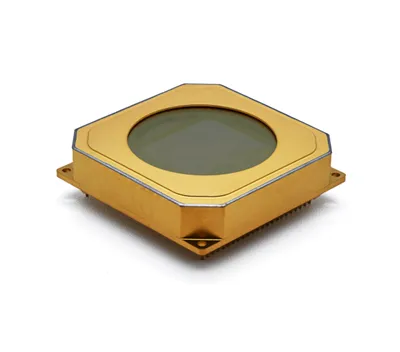
First, let’s cut through the jargon real quick. LWIR stands for Long-Wave Infrared—this is the infrared spectrum that picks up natural heat radiation from objects, no external light needed. Uncooled means we don’t need bulky, expensive cooling systems to run the camera, which keeps the price point low and the camera compact. The “640” refers to the resolution: 640×480 pixels on the sensor. A lot of guys in the industry used to think you needed cooled MWIR (Mid-Wave Infrared) with way higher resolution for building work, but let’s test that assumption.
I’ve been on jobs where a general contractor was missing a massive air leak in a commercial building’s attic. The HVAC team was guessing, cutting holes everywhere, wasting thousands on labor and materials. We grabbed our LWIR uncooled 640 camera, cranked it to the attic, and boom—straight off the bat, the leak showed up as a bright cold spot against the warm attic insulation. The 640 resolution was sharp enough to pinpoint exactly where the duct was leaking, not just a vague “there’s a leak here” spot. No need to drill 10 extra holes, just target that one area. That’s the kind of win we see all the time with these cameras.
Wait, but let’s talk about what building inspectors actually need. Most residential and light commercial jobs don’t have super extreme, high-temperature stuff like industrial furnaces (that’s where MWIR might edge out a little, but even then, uncooled LWIR works). What do we deal with? Missing insulation, moisture intrusion, electrical hotspots, pipe leaks, roof damage from poor ventilation. Let’s break down each use case and how the LWIR uncooled 640 handles it.
Moisture is a big one. When water gets into a wall or roof, it cools the material, so on an LWIR image, that’s a dark spot. Our 640 sensor can pick up a 0.05°C temperature difference—super sensitive, right? On a recent residential inspection, a homeowner thought their basement had a minor leak, but we scanned the upper floor, and found a hidden roof leak that was seeping through the attic ceiling, into the wall cavity above the master bedroom, and sitting there for months. The 640 resolution let us map exactly how far the moisture had spread in the wall, instead of just a tiny blob. If the resolution was lower, say 320×240, that moisture blob would be blurry, and you might miss the extent of the damage, leading to more repairs later.
Electrical inspections are another huge area. Overloaded circuits, loose connections, bad breaker panels—these all create hotspots before they cause a fire. The LWIR uncooled 640 can scan a whole electrical panel in 10 seconds, no shutting down power, no touching anything. I had a customer who’s a certified electrical inspector tell me he used to carry a $10k cooled camera for this, but now he uses our uncooled 640, and he gets the same accuracy for 1/10th the cost. The 640 pixels are enough to resolve individual circuit terminals, so you don’t mix up a hot connection with a normal one. Even in a dim panel room, you don’t need a flash—infrared works in total darkness.
But wait, why not just use a visual camera? Let’s be real—visual cameras can’t see through walls, or tell the difference between a cold spot that’s a leak vs. just a window draft. Our camera picks up heat, so it’s like seeing the “invisible” parts of the building. And uncooled vs. cooled: cooled cameras are heavy, need to warm up for 10+ minutes, cost a lot to maintain, and are fragile for jobsite use. Our uncooled models power on in 2 seconds, weigh less than a pound, can take a drop from a ladder without breaking (we test them for that), and are built for the jobsite—no fancy lab environment needed.
Now, I know some of you are thinking, “What about large commercial buildings? A 640 resolution is too small for a 10,000 sq ft roof.” Let’s address that. We work with commercial inspectors all the time. You don’t need to stand right on the roof to scan it—hold the camera from the end of a 10-foot pole, or even shoot it from a 2nd-story window. The 640 resolution is enough to pick up individual shingles or membrane seams, so you can spot where the roofing is letting heat escape (which means water will get in next). I had a guy who does grocery store inspections tell me he scans a whole store roof in 15 minutes with our camera, where he used to take 2 hours with his old lower-res camera. That’s a huge time saver.
But let’s be honest, no camera is perfect. What are the limitations here? If you’re working in an area with extreme ambient heat—like an industrial boiler room where temperatures are over 300°C—you might want a MWIR cooled camera, because LWIR can struggle with that high heat (it can saturate the sensor). But 95% of building inspection work? Residential, office buildings, retail, light industrial? LWIR uncooled 640 is more than enough. Another limitation: you have to wait for the environment to stabilize a little. If you just walked into a building from the cold outside, the heat from your body might mess up the first scan. But after 5 minutes, it’s locked in, same as any other thermal camera.
We’ve had so much feedback from customers that used to stick to visual inspections or big, clunky thermal setups. One residential inspector told me he used to charge $500 for a standard inspection, because he needed an extra tech with a thermal camera. Now he uses our LWIR uncooled 640, can do the inspection himself, and still makes the same profit, or even more, because he can spot issues other inspectors miss, so he can upsell the customer on repairs before they turn into disasters. Another customer, a property management company, saved $20k last year in emergency repairs because they caught pipe leaks in the walls before they caused mold or structural damage—all with our camera.
The key here is that the 640 resolution isn’t just a number. It’s the sweet spot for building inspection. Lower resolution (like 320×240) is okay for basic checks, but you can’t get the detail needed to pinpoint small leaks or hotspots. Higher resolution (like 1280×1024) is overkill for 99% of building work, and it adds a ton of cost and bulk. Our LWIR uncooled 640 hits that sweet spot—affordable, durable, easy to use, and accurate enough for every inspection job you’ll face on a daily basis.
I don’t want this to sound like a sales pitch, but let’s talk about who this is for. If you’re a building inspector, general contractor, property manager, or even a homeowner who wants to do their own annual checks, this camera will change how you see buildings. No more guessing, no more wasting money on unnecessary repairs, no more missing hidden issues that cause big headaches down the line.
If you’re tired of using cameras that are too expensive, too slow, or don’t give you the detail you need for building inspection, give our LWIR uncooled 640 a look. We don’t do fancy demo videos with studio lights, we send you a camera that’s built to work on real jobsites, rain or shine, cold or warm. We can hook you up with a trial, or a bulk quote if you’re a company that needs multiple units for your team. Reach out to our team to talk through your specific inspection needs—whether you’re doing a 1,000 sq ft house or a 50,000 sq ft warehouse, we can help you figure out if this camera is the right fit, and get you set up to start saving time and money on your next job.
Complex Parts References:
- Grinzato, E., Bison, P., & Marinetti, S. (2018). Infrared Thermography for Building Inspection: A Review. Journal of Building Physics, 41(5), 403-432.
- Maldague, X. P. V. (2020). Introduction to Infrared and Thermal Testing (3rd ed.). John Wiley & Sons.
- American Society of Home Inspectors (ASHI). (2021). Thermal Imaging Guidelines for Residential Building Inspections. ASHI Standards of Practice and Guidelines.
- National Fire Protection Association (NFPA). (2022). Electrical Inspection Practices Using Infrared Thermography. NFPA 70B: Recommended Practice for Electrical Equipment Maintenance.
- International Energy Agency (IEA). (2019). Thermal Imaging for Building Energy Audits: Best Practices. IEA Energy in Buildings and Communities Programme.
Xi’an Zhongke Lead Ir-Tech Co., Ltd.
We are one of the most experienced lwir uncooled 640 manufacturers in China, specialized in providing high quality OEM products with the industrial grade. We warmly welcome you to wholesale high performance lwir uncooled 640 at an affordable price from our factory.
Address: Building 8,Hard Technology Enterprise Community No.3000,Biyuan 2nd Rd,High-Tech Zone Xi’an,Shaanxi,China
E-mail: sales@lead-ir.com
WebSite: https://www.leadinfrared.com/
