Alright, let’s cut to the chase—if you’re deep in shipbuilding, you know the game is all about tight tolerances, weirdly shaped parts, and not wasting time (or money) reworking components. For years, shipbuilders relied on 3-axis machining centers for most jobs, but let’s be real—those old machines hit a wall the second you needed to cut a complex, curved part from every angle without re-clamping it. That’s where five-axis machining centers come in, and as a guy who sells these bad boys, I’ve seen firsthand how they’ve transformed the shipyard floor from a place of constant headaches to one that cranks out quality parts fast. Let’s break down exactly how these machines are being used in shipbuilding, no fancy jargon (or AI buzzwords) to bog this down. Five Axis Machining Center
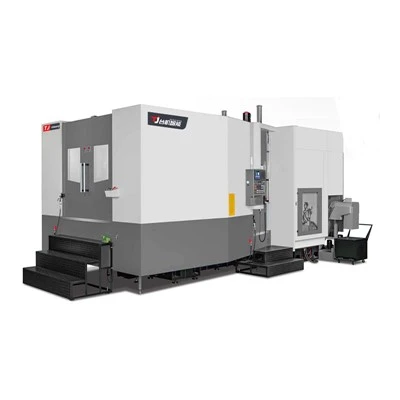
First off, let’s get the basics straight for anyone who might be new: a five-axis machining center doesn’t just move along X, Y, and Z like a standard machine—it also rotates two axes (usually A and B, or sometimes A and C) to tilt and spin the part or the tool. So you can cut any surface, any angle, without touching the part once it’s clamped. In shipbuilding, that’s a game-changer because so many ship parts are organic, curved, or have hidden features that 3-axis machines can’t reach without multiple setups (which = more errors, more time, more cost).
Let’s start with the big stuff: marine propellers and rudders. I’ve been talking to shipyard guys for years, and this is where five-axis machines have saved them the most cash. Propellers aren’t flat discs—they’re curved blades designed to cut through water efficiently, with super precise angles on every single blade. Back in the day, you’d use a 3-axis machine to rough out the blade, then bring in a handful of skilled machinists with hand tools to file and shape the fine details. That took weeks, and even then, the blades were never perfectly identical—leading to vibrations that wasted fuel and wore down the engine faster. With a five-axis machine, you can program the exact curve and angle for each blade, mill them in one go, and hit tolerances of 0.01mm or tighter. I had a client last year who was making propellers for cargo ships—they cut their production time per prop from 12 days to 3, and fuel efficiency went up 4% because the blades were so smooth. Rudders? Same deal. They’re big, curved, and need a precise pivot point to turn the ship smoothly. Five-axis milling lets you machine the entire rudder surface, including the hinge slots and control surfaces, without moving it. No more re-clamping errors, no more shimming parts to get them aligned right.
Next up, hull components and structural parts. Wait, you might be thinking—hulls are big, right? How can a machining center handle that? Well, modern five-axis machines come in sizes that can tackle large-scale parts, like the stringers (those long, curved beams that run along the hull to add strength) and the bulkheads that separate the ship into compartments. These parts have complex geometries—they’re not straight like a steel I-beam; they’re curved to match the hull shape, and often have cutouts for pipes, electrical wires, or access hatches. A 3-axis machine would have to mill each cutout separately, or you’d have to grind them by hand, which leaves rough edges and uneven surfaces that can cause stress points (not good for a ship that’s bouncing through the ocean). Five-axis machines can make those curved stringers with all the cutouts integrated, no extra steps. My team worked with a small shipyard building fishing trawlers—they were struggling with a hull support bracket that kept cracking because the 3-axis mill left sharp edges at the corners. We programmed their five-axis machine to round those edges while milling the rest of the bracket, and the cracking stopped cold. Bonus: less material waste, too. Because you’re not taking off extra metal to fix mistakes, you use 10-15% less raw steel or aluminum per part. That adds up when you’re making hundreds of these.
Then there’s turbo machinery parts—like turbine blades for the ship’s engine or exhaust systems. Ships run on big diesel engines or turbines, and their blades have intricate airfoil shapes that need to be perfect for maximum power and minimal wear. A 3-axis machine can’t get the curve of the airfoil right on both the leading and trailing edges without flipping the part. Five-axis does it in a single setup, and the surface finish is so smooth that you don’t need to do any polishing—saves hours of hand labor. I had a client who made turbine blades for a cruise ship’s auxiliary engine; before, they’d reject 20% of the blades because of surface imperfections. After switching to a five-axis machine, their rejection rate dropped to under 2%, and the engine’s lifespan went up because the blades weren’t rubbing against other parts. Also, for exhaust stacks and intake pipes—those big, curved pipes that stick out the top of the ship—they often need flanges at odd angles to connect to the engine. Five-axis machining lets you mill those angled flanges directly onto the pipe end, so you don’t have to weld on a separate flange (which is another step that can cause leaks).
Wait, let’s not forget about smaller but critical parts—like fasteners, connector brackets, and even parts for lifeboats. You might think, “small parts don’t matter,” but if a lifeboat bracket fails, that’s a safety issue. Five-axis machines can crank out these small, complex parts fast, with consistent quality. For example, a bracket that holds a navigation sensor on the hull—its mounting points might be at an angle to fit the curved hull. A three-axis machine would require custom fixtures every time, but a five-axis machine adjusts the tool angle automatically, so you can program a batch of these brackets and run them overnight without a machinist standing by. That’s lights-out machining, my friend—something shipyards are scrambling to do right now because of labor shortages. Most shipyards can’t find enough skilled machinists to work late shifts, but five-axis machines can run on their own, using pre-programmed jobs, so you get more parts without paying overtime.
Another big one: custom ship builds. A lot of shipyards now make specialized vessels—yachts, research ships, oil rig support boats—instead of just generic cargo ships. These have one-of-a-kind parts, not just repeatable ones. For example, a research ship might have a sonar dome on the hull that’s a custom curved shape to reduce noise. You can’t make that with a 3-axis machine because it’s a complex, asymmetrical curve. Five-axis lets you take a 3D scan of the design, upload it to the machine, and mill the exact shape from a block of metal or composite. No more trying to bend a steel plate to the right curve and hope it works. I worked with a research institute building an oceanographic ship; they were spending $50k on a custom sonar dome that took 6 weeks to make. With a five-axis machine, we made a prototype in 3 days, and the final dome was 20% lighter, which improved the ship’s speed.
Now, let’s talk about why so many shipbuilders are hesitant to switch. I get it—five-axis machines are a big investment. But here’s the thing: the money you save in labor, rework, and material waste pays for it in 18 to 24 months, from what I’ve seen. And the labor shortage? It’s real. You can’t find a machinist who can hand-shape a propeller blade to tolerance these days, but you can train a new operator to run a five-axis machine in a month, as long as they know basic CAD/CAM software. That’s a huge win for shipyards that are struggling to keep staff.
But here’s the catch—you can’t just buy any five-axis machine for shipbuilding. These parts are big, heavy, and need to hold tight tolerances even when the machine is running 12 hours a day. Cheap, off-the-shelf five-axis machines don’t have the rigidity for ship parts; they’ll flex under the weight of a 500kg steel billet and mess up the cut. The machines I sell are built with heavy cast iron frames, high-torque spindles, and linear guides that can handle constant, heavy loads without drifting. That’s non-negotiable for shipwork.
Wait, let’s go back to a recent example to make this real. A client of mine in the Gulf Coast was building a new fleet of tugboats. They were using a 3-axis machine for their rudders, and each rudder took 8 hours to mill, plus 4 hours of hand finishing because the edges were rough. We installed a five-axis machine, programmed the rudder shape, and it milled the entire thing—including the angled pivot point and the edge finishes—in 5 hours. No hand work needed. They went from producing 2 rudders a day to 5, and the quality was so consistent that their boat manufacturer stopped rejecting their rudders. That’s $20k a month in extra revenue for just one machine, and they used that money to expand their shop.
So why is this all changing now? Because shipbuilders are realizing that they can’t keep doing things the old way. The demand for more fuel-efficient, specialized, and safe ships is higher than ever, and 3-axis machines can’t keep up. Five-axis isn’t a “nice-to-have” anymore—it’s a necessity to stay competitive.
If you’re a shipyard manager, a maintenance foreman, or anyone in charge of parts production, and you’re tired of reworking parts, missing deadlines, or struggling to find skilled labor, let’s talk. I’m not here to pitch you a overpriced machine with all the fancy bells and whistles you don’t need. I’m here to walk through your current processes, point out where a five-axis machine can save you time and money, and give you honest advice—no sales fluff. Whether you’re making small brackets or big propellers, there’s a five-axis setup that fits your needs. Let’s connect and figure it out.

If you’re ready to stop fighting with outdated equipment and start cranking out top-quality ship parts, reach out to discuss how a five-axis machining center can work for your yard.
Vertical Machining Center References:
- American Bureau of Shipping. (2022). Advanced Manufacturing Technologies for Marine Components. ABS Technical Report.
- Society of Manufacturing Engineers. (2023). Five-Axis Machining in Large-Scale Industrial Applications. SME International.
- Marine Engineering Today. (2024). Shipbuilding’s Shift to Automated Precision Machining. Industry Analysis.
- International Maritime Organization. (2021). Fuel Efficiency Standards and Manufacturing Best Practices for Marine Vessels. IMO Maritime Publication.
Guangdong Taiji Intelligent Equipment Co., Ltd.
With abundant experience, we are one of the most professional five axis machining center manufacturers and suppliers in China. Please feel free to buy cheap five axis machining center for sale here from our factory. For price consultation, contact us.
Address: Room 107, Building 15, No. 911 Jian’an Road, Chang’an Town, Dongguan City, Guangdong Province
E-mail: sale@gdtaijicnc.com
WebSite: https://www.gdtaijicnc.com/
