Hey everyone, let’s talk about something that makes or breaks the vibe behind every bar or restaurant: the back bar cooler. If you’ve ever stood behind a busy bar during happy hour, you know those sleek units that hold all the beer taps, mixers, and sodas are the unsung heroes of the whole operation. But today, I want to dive into something we talk about every single day at our shop—stability. Not the "I stand my ground" kind of stability, but the kind that keeps your drinks cold, your business running, and you from losing your mind over a broken cooler at 5 PM on a Friday. Back Bar Cooler
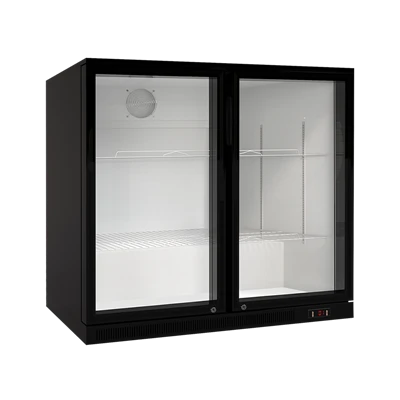
First off, let’s get one thing straight: back bar cooler stability isn’t just about whether the unit wiggles when you lean on it. Sure, that’s part of it, but it’s way deeper. When we say a back bar cooler is stable, we’re talking about three core things: temperature stability, structural stability, and operational stability. Trust me, after 8 years of selling these things, I’ve seen all three go wrong, and none of them are pretty.
Let’s start with the one everyone notices first—temperature stability. Picture this: you’re a bartender, mid-rush, pulling a pint for a regular, and you reach for your go-to IPA, but it’s lukewarm. Gross, right? That’s temperature instability, and it’s the kind of mistake that gets your Yelp review spammed. But here’s why it happens, and why good stability matters. A back bar cooler’s job is to keep that 38-40°F range for beer and 34-36°F for wine—any swing outside that, even by a few degrees, is a problem. Cheap coolers we used to see years ago had basic compressors that kicked on and off like a light switch, leading to 5-10 degree shifts every hour. Now, most good units use inverter compressors, which adjust their cooling output based on the load. That’s stability. If your cooler can hold a consistent temperature even when you’re loading up 20 cases of soda at 3 PM, or when the door gets slammed 50 times an hour during a rush, that’s temperature stability working. I remember a client last year, a small craft beer bar in Portland, who told us their old cooler had their draft beer going skunky every summer. They switched to our line, and their pour consistency shot up—they even stopped having to dump half a keg a month. That’s the payoff of a stable temp.
Next up, structural stability, and this is where a lot of new bar owners cut corners. Let’s be real, back bar coolers get banged up. Bartenders are leaning on them, stacking cases on top, dragging kegs in and out—hell, sometimes a line cook will drop a tray of glasses on them by accident. If the unit isn’t built for that, it’ll start to warp, the doors will stop sealing right, and suddenly you’re back to that temperature problem we talked about. Structural stability starts with the frame. A lot of cheap coolers use thin sheet metal that bends after a few months. Our units? We use 22-gauge galvanized steel frames, not that flimsy stuff that flexes when you rest your arms on the top shelf. The doors are another big one—magnetic gaskets are standard, but a stable door needs a sturdy hinge too. I’ve had clients call us panicking because their cooler door fell off after a year. That’s not structural stability; that’s a unit that was never meant for real bar use. Also, the base matters. If your cooler is sitting on uneven tile, it’s going to tilt, the door won’t seal, and eventually, the compressor will start to strain. We always include adjustable leveling feet with every unit we sell—small detail, but it makes a huge difference. Last month, a client in Austin told us their buddy’s cooler from a big box store wobbled so bad when the keg tap was mounted that he had to prop a soda can under it. Ours? He hasn’t touched the feet since he installed it. That’s structural stability for you.
Now, operational stability, which is the behind-the-scenes stuff that keeps your repair guy from calling you every other week. This is about how the cooler runs day in and day out, 12-16 hours a day, 6 days a week. We’ve all seen those coolers that sound like a jet engine taking off at 2 AM—noisy, inconsistent, and just plain unreliable. Operational stability means the compressor runs smoothly, the fan motors don’t burn out, and the electrical components hold up. A big part of this is the cooling system’s design. Our coolers have condenser coils that are easy to clean—wait, that’s a big one! If you can’t clean the condenser, dust and beer residue build up, the compressor works harder, and eventually it dies. A stable cooler is designed for maintenance, not just install and forget. I can’t tell you how many times I’ve heard a client say their old cooler’s condenser was tucked so tight they couldn’t get a vacuum in there, so they just never cleaned it. Six months later, compressor replacement bill: $1,200. That’s not operational stability. Our units have a front-access condenser—takes 2 minutes to pull the cover, vacuum it, and done. Small thing, but it keeps the whole unit running strong for years.
Now, why does this stability matter so much for your business? Let’s do the math. If your beer is at the right temp, you’re not wasting kegs—each keg is 15.5 gallons, that’s 124 pints. If a keg is skunky because of temp swings, you’re looking at $100-$150 down the drain every time. Multiply that by 2 a month, that’s $2,400 a year. Then there’s repair costs—compressor replacement, door gaskets, fan motors—another $1,000+ a year for an unstable unit. And let’s not forget customer experience. A lukewarm beer gets a bad review, a wobbly cooler that makes it hard to grab drinks during a rush means your bartender is slower, wait times go up, and customers go somewhere else. Stability isn’t just a feature—it’s a cost saver and a revenue driver.
Wait, but here’s the thing—stability doesn’t mean it has to be boring. A lot of bar owners think commercial-grade coolers are all industrial and ugly, but stability can come with style too. We build units that fit behind modern bars, with stainless steel exteriors that look sleek, glass doors so customers can see the selection, even custom shelf layouts to fit your specific needs. You don’t have to choose between a cooler that works and one that looks good. That’s the sweet spot.
I get it, buying a back bar cooler is a big investment. You’re not just buying a box that keeps drinks cold—you’re buying something that’s going to be in your bar for 10, 15 years. So when you’re shopping, don’t just look at the price tag. Ask about temperature consistency, frame thickness, door hinges, condenser access. Those are the signs of a stable unit. A lot of cheap units out there are marketed as "commercial grade" but they’re really made for small, occasional use, not 12-hour rushes. Don’t fall for that.
Let me share a quick story that sums this up. A client in Chicago reached out to us last fall, frustrated with their 2-year-old cooler that was always breaking down. They were a small neighborhood bar, didn’t have a big budget, so they bought the cheapest one they could find. Within the first year, they replaced the compressor twice, fixed the door seal three times, and dumped over 20 kegs because of temp issues. They spent almost $3,000 on repairs and wasted product in that first year. They bought one of our mid-range units, and in the 8 months since, they’ve had zero repairs, haven’t dumped a single keg, and their Yelp reviews even improved because their drafts are consistently good. That’s the difference stability makes.
So, to wrap this up, back bar cooler stability isn’t one thing—it’s the combination of holding a consistent temperature, being built tough enough to handle daily bar life, and running reliably without breaking the bank on repairs. For any bar or restaurant owner, that’s non-negotiable. Because at the end of the day, your back bar cooler is the heart of your operation. If that heart is stable, your whole business runs smoother.

If you’re in the market for a new back bar cooler, or you’re tired of dealing with an unstable unit that’s costing you money, hit us up to talk through your needs. We don’t do one-size-fits-all—we’ll help you pick a unit that fits your bar size, your budget, and your specific drink menu. No pressure, just real talk about what works for busy places like yours.
Back Bar Cooler References
- American Society of Heating, Refrigerating and Air-Conditioning Engineers (ASHRAE). 2022. ASHRAE Handbook: HVAC Applications.
- National Restaurant Association. 2023. Commercial Kitchen Equipment Maintenance Best Practices.
- Food and Drug Administration (FDA). 2021. Food Temperature Control Guidelines for Retail Food Establishments.
Zhejiang Xingbao Electrical Appliances Co., Ltd.
As one of the most professional back bar cooler manufacturers and suppliers in China, we also support customized service. Welcome to wholesale bulk high quality back bar cooler in stock here from our factory. If you have any enquiry about pricelist, please feel free to email us.
Address: No. 10 Baisha Road, Lianhang Development Zone, Chang’an Town, Haining City, Jiaxing City, Zhejiang Province, China
E-mail: zjxingbao@gmail.com
WebSite: https://www.sunborncn.com/
