Hey folks, if you’ve ever shopped for a vertical machining center (VMC) – whether you’re a small job shop owner, a production line manager at a mid-sized factory, or someone just dipping your toes into CNC machining – you’ve definitely asked this question: “How long is this thing actually gonna last?” Vertical Machining Center
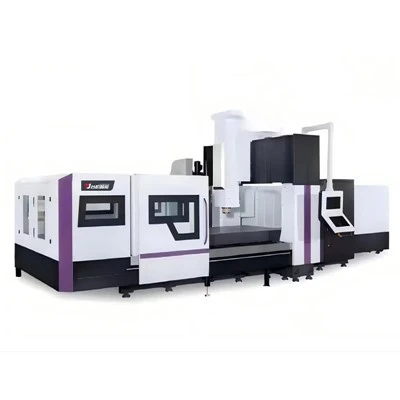
I get it. A VMC is a huge investment. It’s not a $500 drill press you replace every few years. Dropping six or seven figures on a machine that’s supposed to run parts for years? That’s nerve-wracking. And let’s be real, everyone’s heard horror stories: a “20-year-old VMC” that craps out after 5, or a brand new model that dies right before a big production run. So today, I’m pulling back the curtain on what actually determines a VMC’s lifespan – straight from a guy who’s been selling, servicing, and troubleshooting these things for 12 years, no corporate fluff, no sales pitches hiding in the details.
First off, let’s get one thing straight: there’s no one-size-fits-all number. I’ve seen VMCs that still run perfect after 35 years, and I’ve seen ones die after 7. The difference isn’t how much you paid (okay, sometimes it is), it’s how you use it, how you maintain it, and even what brand it is (but more on that later). Most of the time, a well-built VMC will last 15 to 25 years if you take care of it. That’s the general sweet spot. But let’s break that down into the stuff that actually moves the needle, because that’s the part no one tells you.
Let’s start with the machine’s bones – the core components that make it a VMC, not a fancy plastic toy. The big three here are the frame, the linear guides, and the spindle.
The frame is the cast iron or steel base that holds everything together. Cheap VMCs use thin, light cast iron that’s prone to warping under heavy cuts or high heat. Good ones use heavy-duty, stress-relieved cast iron that’s baked at 1,000 degrees to get all the internal tension out. That stuff? It doesn’t warp. I had a customer last year with a 1992 VMC he bought used for $12k, because it had the old-school stress-relieved frame. He runs it 10 hours a day, 6 days a week, cutting 4140 steel all day – and the frame is still perfectly straight. Compare that to a budget VMC we sold a new shop last year, same size, half the price, thin cast iron. They ran it for 3 months cutting titanium, and the frame warped enough that their parts were out of spec by 0.020 inches. Game over.
Then there are the linear guides and ballscrews. These are the parts that move the table and the spindle up, down, left, right. Cheap VMCs use ball bearings that are tiny, or even slide guides (the old, outdated kind that use friction instead of rolling). Good ones use oversized, sealed linear guideways and precision ballscrews that are lubricated regularly. I’ve seen a set of linear guides on a well-maintained VMC last 20 years, no replacements needed. On a budget machine? Maybe 5 years, because the bearings get contaminated with coolant and chips, rust, and start to wear unevenly. That’s when you get slop in the axes, which means bad parts, downtime, and costly repairs.
And the spindle? Oh man, the spindle is the heart of the VMC. If the spindle dies, the machine is dead. Spindles come in three main types: belt-driven, gear-driven, and direct-drive (or built-in motor). Belt-driven spindles are common on lower-cost VMCs – they’re good for light work, but the belt stretches, wears, and can break, usually every 5 to 10 years. Gear-driven spindles are tougher, used for heavy cutting, they last longer, but the gears wear over time if you don’t change the gear oil. Direct-drive spindles? These are the ones on most mid-range to premium VMCs now. No belts, no gears, just a motor built right into the spindle. I’ve seen direct-drive spindles last 15 to 20 years, sometimes more, if you keep the coolant lines clean and the bearings lubricated. But if you ignore the spindle maintenance – like not changing the grease in the bearings every year, or letting chips get into the spindle housing – a good spindle can die in 5 years. I had a customer once who ran his VMC 24/7 making aluminum parts for auto parts, and he skipped a spindle grease change for 2 years. Spindle seized up, cost him $8k to replace. That’s a $8k mistake he couldn’t afford.
Okay, so the core parts matter, but let’s be real – even the best core parts won’t last if you don’t maintain the machine. I can’t tell you how many customers call me in a panic because their 10-year-old VMC is broken, and when I ask them what maintenance they do, they say “the dealer comes once a year for a tune-up.” Newsflash: VMCs are like your car. You don’t just take it in once a year for an oil change and never check your tires or fluids. There’s daily, weekly, monthly, and annual maintenance you have to do.
Daily stuff: Wipe down the machine, blow out chips from the ways and the spindle, check the coolant level, make sure the air filter isn’t clogged. If you leave chips on the ways overnight, they rust and scratch the linear guides. If your coolant is low, your spindle overheats. That’s basic.
Weekly: Change the way oil, check the spindle grease, inspect the seals on the linear guides. Seals get cracked, let chips in. I’ve seen seals last 5 years, but if you don’t check them, they can start leaking in 2 years, and before you know it, you have $10k in damaged linear guides.
Monthly: Calibrate the axes, check for backlash, test the spindle runout. Backlash is when the axis doesn’t move exactly where it’s supposed to – that’s from worn ballscrews or bad guides. Calibrating fixes that, and if you do it monthly, you catch small issues before they become big, expensive problems.
Annual: Full service from a tech, replace old hoses, belts (if you have them), filters, check the frame for any cracks or warping. Most premium VMCs have a recommended maintenance schedule, and if you follow it, you can extend the lifespan by 5, even 10 years. I had a customer with a 25-year-old VMC that he runs for prototype work, and he does every single maintenance thing on the schedule. He just replaced the original spindle last year – because it had 25 years of runs, not because of neglect. That machine could easily go another 10 years.
Wait, but what about technology? A lot of people ask me, “Why would I buy a 20-year-old VMC when everything is newer and faster?” Great question. Technology is a big part of the modern lifespan of a VMC. Back in the day, VMCs ran on hardwired controls, no screens, no fancy programming. Now, modern VMCs have touchscreen controls, IoT connectivity, automatic tool changers with 30+ tools, high-speed machining, etc. So even if an old VMC is physically fine, it might be obsolete in 10 years because you can’t run the parts you need to, or you can’t integrate it with your factory’s CAD/CAM system. That’s a big one I don’t see a lot of people talk about. So if you’re buying a VMC for high-volume production where you need to make 10,000 parts a month, you might want a newer model that’s faster and more reliable for that work, even if an old VMC is physically good. But if you’re a job shop making custom prototypes once a week, an old, well-maintained VMC can be perfect for decades.
Also, how you use the machine matters more than almost anything. Let’s talk about duty cycle. A VMC that runs 8 hours a day, 5 days a week? That’s light duty, lifespan will be on the higher end – 20 to 25 years. A VMC that runs two shifts, 16 hours a day? That’s medium duty, lifespan 12 to 18 years. A VMC that runs 24/7, lights out machining, 7 days a week? That’s heavy duty, lifespan 8 to 15 years. Wait, why is that? Because every part is moving constantly, heating up, wearing out. I had a customer with a medical parts shop that runs their VMC 24/7 making titanium implants. They replace the linear guides every 10 years, the spindle every 12, and the machine is still running strong. But if that same customer cut corners on maintenance, that machine would be dead in 5 years.
Also, what materials are you cutting? That’s huge. Cutting soft aluminum? That’s easy on a VMC, no heavy forces, less heat. Cutting titanium, stainless steel, hardened steel? That’s heavy forces, a lot of heat, more wear on the spindle, the frame, the ballscrews. I had a customer who used his VMC to cut aluminum for lawnmower parts, ran it 8 hours a day for 15 years, barely had any repairs. Then he switched to cutting stainless steel for valves, same machine, ran it 3 years, and the spindle started to fail because all the heavy cutting wore it out. That’s why you have to match the VMC to the job. If you’re going to cut tough materials, you need a heavy-duty VMC, not a light one, and the lifespan will be shorter.
Now, let’s bust some common myths I hear all the time. Myth #1: “Budget VMCs only last 5 years.” No, not always. I’ve seen budget VMCs (from reputable brands, not no-name Chinese imports) that are well-maintained, run light duty, and last 15 years. But no-name, off-brand VMCs that cost half as much as the big names? Yeah, those usually only last 5 to 10 years, because their core parts are cheap, and they cut corners on stress relieving and precision. Myth #2: “Once a VMC hits 10 years, it’s worthless.” No, that’s absurd. I’ve sold used VMCs that are 15 years old, well-maintained, and they run better than some new budget models. The only reason you wouldn’t buy a 15-year-old VMC is if you need the latest tech, or if you’re going to run it on heavy duty with tough materials. For most small shops, a 10 to 15-year-old used VMC from a reputable brand is a steal, and it’ll last another 10 years no problem. Myth #3: “You can’t upgrade a VMC to make it last longer.” Yeah you can! You can upgrade the control system to run newer software, upgrade the spindle to a higher torque one, add better linear guides, even add IoT monitoring to catch issues before they break. I had a customer with a 12-year-old VMC, he upgraded the control and the spindle, and it runs like new, and he’s getting another 10 years out of it. That’s way cheaper than buying a whole new machine.
Wait, but what about the parts and service? That’s another big one. If you buy a VMC from a company that’s been around, that has local service, and keeps parts in stock, your VMC will last way longer. If you buy a no-name VMC that’s made in a factory that closed 5 years ago, good luck getting parts when something breaks. I had a customer who bought a VMC from a brand that went under, 8 years ago. Last year, his linear guides broke, and he had to custom make them, which cost twice as much as buying new guides, and took 2 months to get. That’s a death sentence for a production machine. So when you’re choosing a VMC, don’t just look at the price. Look at the brand, their service network, how long they’ve been in business, and how easy it is to get parts. That adds years to your VMC’s lifespan, because you can fix it when it breaks, not scrap it because you can’t get parts.
Let’s wrap this up with a real example, something I see every day. Last year, I helped a small aerospace job shop pick a new VMC. They had a 12-year-old VMC from a mid-tier brand, ran two shifts a day, cutting aluminum and titanium for satellite parts. It was broken down every other month because of worn linear guides and a failing spindle. I showed them two options: a new premium VMC, and a used 15-year-old premium VMC from a reputable brand, fully serviced and calibrated. They bought the used one. Why? It was half the price, same precision, same spindle (just rebuilt), same linear guides (new ones), and the local service tech could be there in 2 hours if something went wrong. A year later, they’re running it 12 hours a day, no breakdowns, their parts are all meeting specs, and they saved enough money to hire another machinist. That’s the thing – the lifespan of a VMC isn’t just a number on a spec sheet. It’s a choice you make, based on how you use it, how you take care of it, and what you need it to do.
So if you’re reading this, and you’re wondering if your VMC is going to last, or if you’re in the market for a new one, here’s my advice. First, forget the generic “20 years” line. Calculate your duty cycle, what materials you’re cutting, how much maintenance you can actually do. If you’re buying new, go with a reputable brand that has local service. If you’re buying used, make sure it’s been well-maintained, no major damage, and parts are easy to get. And for crying out loud, don’t skip the maintenance. Wiping down the machine for 5 minutes a day is way cheaper than replacing a spindle that costs $10k.
At the end of the day, a VMC is an investment that should last you decades, not years. If you treat it right, it’ll pay for itself many times over. If you cut corners, you’ll be replacing it before you know it.
If you have questions about your current VMC’s lifespan, or if you’re looking for one that fits your needs, feel free to reach out to connect. Whether you’re a small shop just starting out or a big factory looking to upgrade, I can help you find something that’ll last as long as you need it to.
Horizontal Machining Centers References
- Society of Manufacturing Engineers (SME). (2021). Machining Center Lifespan and Reliability Report. Dearborn, MI: SME.
- National Tooling and Machining Association (NTMA). (2022). Best Practices for Vertical Machining Center Maintenance and Longevity. Arlington, VA: NTMA.
- Modern Machine Shop. (2023). “How Duty Cycle and Material Selection Impact CNC Machine Tool Lifespan.” Industry Brief.
Guangdong Taiji Intelligent Equipment Co., Ltd.
With abundant experience, we are one of the most professional vertical machining center manufacturers and suppliers in China. Please feel free to buy cheap vertical machining center for sale here from our factory. For price consultation, contact us.
Address: Room 107, Building 15, No. 911 Jian’an Road, Chang’an Town, Dongguan City, Guangdong Province
E-mail: sale@gdtaijicnc.com
WebSite: https://www.gdtaijicnc.com/
