If you’ve ever walked through a warehouse packed with brand-new corrugated boxes waiting to be shipped, you know that a box folding machine isn’t just a piece of equipment—it’s the quiet backbone of reliable packaging operations. As a supplier who’s installed, serviced, and troubleshooted these machines for more than a decade, I’ve lost count of how many times a client’s production has ground to a halt within days of unboxing their new machine, all because they skipped a few key installation requirements that aren’t in the operator’s manual. Today, I’m pulling back the curtain on the non-negotiable installation details I walk every customer through, no matter their operation size—from small e-commerce fulfillment centers to large-scale consumer goods manufacturers. Box Folding Machine
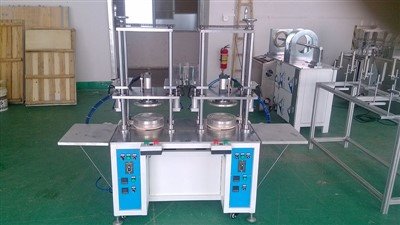
Let’s start with the most overlooked piece of prep work: site assessment long before the truck rolls up with your machine. I can’t tell you how many times I’ve showed up to a site where the “designated” machine spot is crammed between a pallet jack station and a stack of raw cardboard rolls, or where the concrete floor has a visible ¼-inch dip that’s been there for years. Box folding machines are precision tools—they rely on perfectly aligned rollers, calibrated fold heads, and consistent pressure to form clean, consistent boxes every time. If the foundation isn’t up to par, even the most expensive industrial machine will produce lopsided boxes, jam every 10 minutes, and need constant repairs.
For standard semi-automatic folding machines, which handle small to medium batch runs, we require a minimum 4-inch thick concrete slab in the installation area, with a maximum floor deflection of 0.05 inches per linear foot. For fully automatic inline models, which move at 60+ boxes per minute, that slab needs to be 6 inches thick, with deflection no more than 0.02 inches per linear foot. We always ask clients to test their site with a spirit level before our install team arrives—no guesswork here. Another site detail I never skip is floor flatness. I once worked with a mid-sized apparel brand that tried to save money by pouring a thin concrete patch a week before delivery, only to have the machine wobble so badly during setup that we had to re-grind the entire 10×12 foot area on-site. It added two days to their timeline and cost them more than a professional prep would have. Don’t cut corners here.
Next up: power and utility requirements, which vary wildly between machine types and can make or break your installation before it even starts. I’ve seen clients plug a high-voltage automatic machine into a standard wall outlet and wonder why the fold heads won’t engage. Let’s break this down by the most common machine categories.
Semi-automatic tabletop box fold machines (used for low-volume e-commerce or small parts packaging) run on 110V single-phase power, with a minimum 15-amp dedicated circuit. No daisy-chaining this with your desk computers or lighting—surge protectors are fine, but a dedicated circuit prevents voltage drops that cause inconsistent folding pressure. For semi-automatic floor-standing models (20-50 boxes per minute), you’ll need 220V single-phase, 30-amp dedicated circuit, plus access to a compressed air line of 90-120 PSI and at least 1 CFM of air flow. Most of these machines use pneumatic actuators to move fold arms, so a weak air line will lead to uneven folds or jammed cardboard.
Fully automatic inline box folding machines, which integrate with your existing conveyor systems, are the power hogs. These require 480V three-phase power, 60-amp dedicated circuit, plus a compressed air line rated for 120-150 PSI and 2 CFM of consistent flow. We always ask clients to have an electrician and HVAC technician on-site during installation, because the inline machines generate a lot of heat—we need space for venting ducts and cooling units, otherwise the machine’s control panel will overheat and shut down mid-run. I once had a client try to skip having an HVAC line, and by the end of the first 8-hour shift, the machine’s touchscreen was so hot it warped. We had to install a temporary portable AC unit for 3 days while we rerouted vents, costing them an extra day of downtime.
Another utility people forget: waste management. When folding boxes, you’ll get corrugated offcuts, torn cardboard scraps, and sometimes misprinted test boxes. I always require clients to have a dedicated 4-foot wide by 3-foot tall bin within 5 feet of the machine, with a clear path for a small forklift or pallet jack to remove full bins. If that path is blocked by shelves or other equipment, our install team has to waste time re-routing the scrap chute, which adds to the setup time.
Now, space around the machine—this is more than just “enough room to walk.” Too little space during operation, maintenance, and material loading is a leading cause of on-the-job injuries and machine damage. Let’s get specific. For the machine itself, you’ll need at least 2 feet of clearance on all sides for routine cleaning and minor adjustments. For material loading: raw cardboard rolls or flat blanks need to be brought to the machine, so a 3-foot wide unobstructed path from your raw material storage to the machine’s feed station is non-negotiable. For finished boxes, the output side needs a 4-foot wide space to hold finished boxes before they’re moved to shipping—no one wants finished boxes piled up against the wall, causing jams when the machine tries to discharge them.
For automatic inline machines, which connect to production lines, add an extra 6 feet of clearance on the input and output sides for conveyor alignment. I once worked with a large hardware manufacturer that squeezed their new inline machine into a space that was only 2 feet wide on the output side. The finished boxes stacked up so high that they jammed the machine every 15 minutes, and we had to install an extra conveyor extension on-site for $5,000. That’s a cost they could have avoided by just measuring the space before ordering the machine.
Then there’s the material-specific prep, which is often client error that leads to machine issues. Box folding machines work best when clients prep their cardboard correctly before installation. For corrugated blanks, we recommend storing them in a climate-controlled area where temperature is between 60-75°F and humidity is 40-50%. If cardboard is too dry (below 30% humidity), it cracks when folded; too humid (above 60%), it bends and causes jams. I had a craft beverage brand that stored their cardboard blanks in a damp warehouse corner, and within a week of using the machine, 30% of boxes had visible crease lines that were too weak. We had to adjust the machine’s pressure settings, but the root cause was the raw material storage. Always test your cardboard’s moisture content before we install the machine—use a simple moisture meter, and if it’s off, adjust your storage space first.
For printed boxes, avoid letting ink dry completely before folding. Fresh ink (that’s cured with a light or heat) works best, but if ink is still wet, it smudges when the fold arms press against the box. We always give clients a small test batch of blanks to run through the machine before full production, so they can confirm their material works with the machine’s settings.
Finally, professional installation is the last key requirement, even if you think you can save money by doing it yourself. I’ve seen small business owners try to install their own semi-automatic machine, only to have the fold heads misaligned, leading to half their boxes being unusable. Our team doesn’t just plug the machine in and walk away—we calibrate every fold head, test the speed settings, train your operators on basic maintenance, and run a full 2-hour test run with your actual cardboard. We also sign off on a post-install checklist that confirms all power and utility lines are safe, the floor is stable, and the machine is operating at maximum efficiency.
I can’t stress enough that cutting corners on any of these requirements leads to more downtime, higher repair costs, and boxes that don’t meet your quality standards. If you’re in the market for a box folding machine, the first step isn’t ordering the machine—it’s walking through your site with your supplier, checking the concrete, power, space, and material storage. That’s how you avoid the headaches that come with a bad installation.
If you’re ready to invest in a box folding machine for your operation, our team is here to walk you through every step of the process, from site assessment to post-install training. We’ll answer all your questions, work within your timeline, and make sure your machine is set up to run smoothly from day one. Reach out to our team to schedule a consultation and get a tailored installation plan for your facility.
Automatic Plastic Cylinder Machine References
- Corrugated Packaging Technical Association. (2022). Installation and Maintenance Guidelines for Industrial Box Folding Equipment. National Council of Packaging Manufacturers.
- Occupational Safety and Health Administration (OSHA). (2021). Machine Guarding Standards for Packaging and Material Handling Equipment. U.S. Department of Labor.
- International Organization for Standardization (ISO). (2020). ISO 12100: Safety of Machinery – General Principles for Design – Risk Assessment and Risk Reduction. International Organization for Standardization.
Titagong (Dongguan) Machinery Co., Ltd.
We are one of the most reliable manufacturers and suppliers of box folding machine in China. With abundant experience, we warmly welcome you to buy bulk high quality equipment in stock here and get pricelist from our factory. For price consultation, contact us.
Address: No.149, Qingyi Road, Qingxi Town, Dongguan City, Guangdong Province, China
E-mail: shuaizoe@gmali.com
WebSite: https://www.titagonggroup.com/
